
Welcome to Tokyo. If you are searching for the “best Wagyu restaurant” in one of the world’s greatest cities for food, you may find yourself on a difficult quest.
Tokyo is home to thousands of yakiniku and steak restaurants, from Michelin-starred establishments to famous purveyors of top-tier brands like Kobe and Matsusaka Beef. The choices are limitless.
So, by what standard should one truly choose the “best”?
Many people might use the “A5 rank” as their guide. However, if you are a true seeker of culinary knowledge, prepared to let go of that single metric and step into a deeper world of Wagyu, then a new discovery and a profound experience await you.
This article reconsiders the definition of “best,” and will guide you to a restaurant in Tokyo that offers a unique, unforgettable Wagyu experience that transcends mere rankings.
The Light and Shadow of the “A5 Myth”
First, let’s examine why “A5-rank” Wagyu is so highly prized.
The grading of Wagyu is based on a yield grade (A, B, C) and a meat quality grade (1-5). “A5” signifies the highest evaluation in both, with the meat quality grade being judged on four criteria, with a particular focus on the degree of marbling, or sashi.
This system, which emphasizes the Beef Marbling Standard (BMS), greatly contributed to the creation of the “melt-in-your-mouth” texture and sweet “Wagyuko” aroma that Japan is famous for. It is, without a doubt, one of the perfected forms of Wagyu.
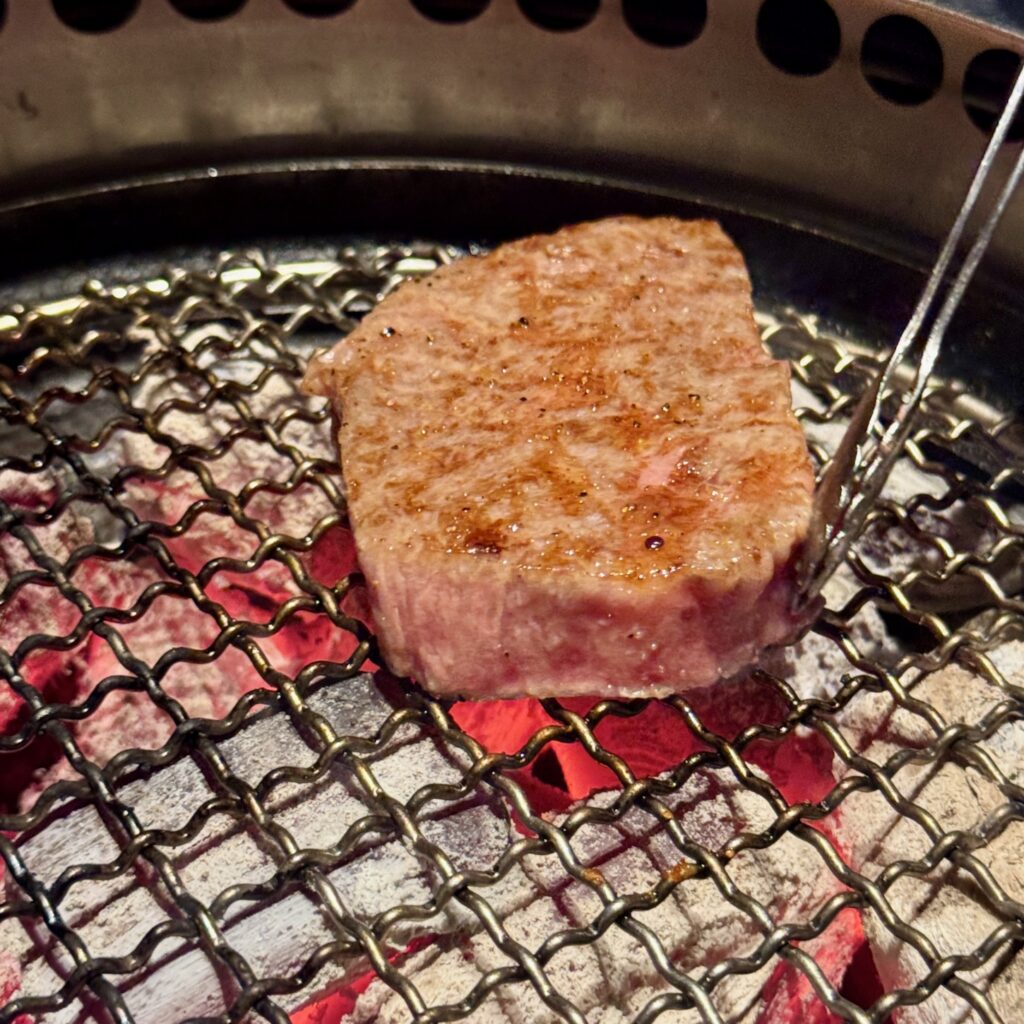
However, it is also true that in recent years, true food lovers have begun to question this “A5 supremacy.”
In the past, the A5 grade was a symbol of true rarity, awarded to only a tiny fraction of all cattle.
However, due to dramatic improvements in production technology, data now shows that over 40% of all Kuroge Wagyu are graded A5.
As a result, the A5 rank is no longer proof of rarity. Instead, we have entered an era where a more essential question is being asked: “Within the A5 grade, what is truly superior?”
One reason for this shift is the one-dimensional nature of the taste. While the first few bites of heavily marbled beef are sensational, the richness of the fat can quickly become overwhelming, and it’s not uncommon to hear that “you can’t eat a lot of it.”
The more fundamental issue is the concern that in the pursuit of excessive marbling, the intrinsic “flavor of the red meat” itself has become diluted.
The taste becomes dominated by the sweetness and aroma of the fat, while the powerful character, deep richness, and savory complexity that should come from the meat itself can be difficult to perceive.
This is the truth behind what some connoisseurs refer to as the “weakness of A5 Wagyu’s flavor.” The A5 standard is excellent for measuring the “artistry of fat,” but it is not a ruler for measuring the “depth of umami.”
True Rarity: The Legend of Takenotani Tsuru Ushi
The essential value of Wagyu that cannot be measured by the A5 standard is best embodied by the phantom Wagyu, the Takenotani Tsuru Ushi.
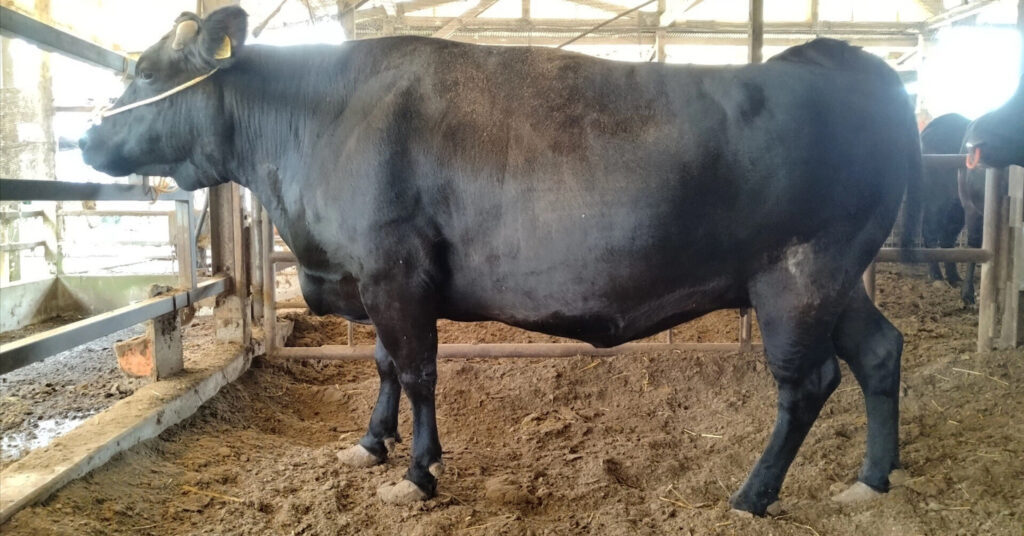
Its history dates back to 1830 in the Edo period, and it is known as the oldest Tsuru-ushi (a distinguished cattle lineage) in Japan.
A progenitor of many modern Wagyu brands, it is a “living ancestor” of the beef world.
The true value of this cattle lies not in the quantity of its fat, but in the powerful, immensely deep umami of its lean red meat (akami). With every chew, a savory richness bursts forth from the muscle fibers.
It is a pure deliciousness that captivates not with the sweetness of fat, but with the profound, intrinsic flavor of the meat itself.
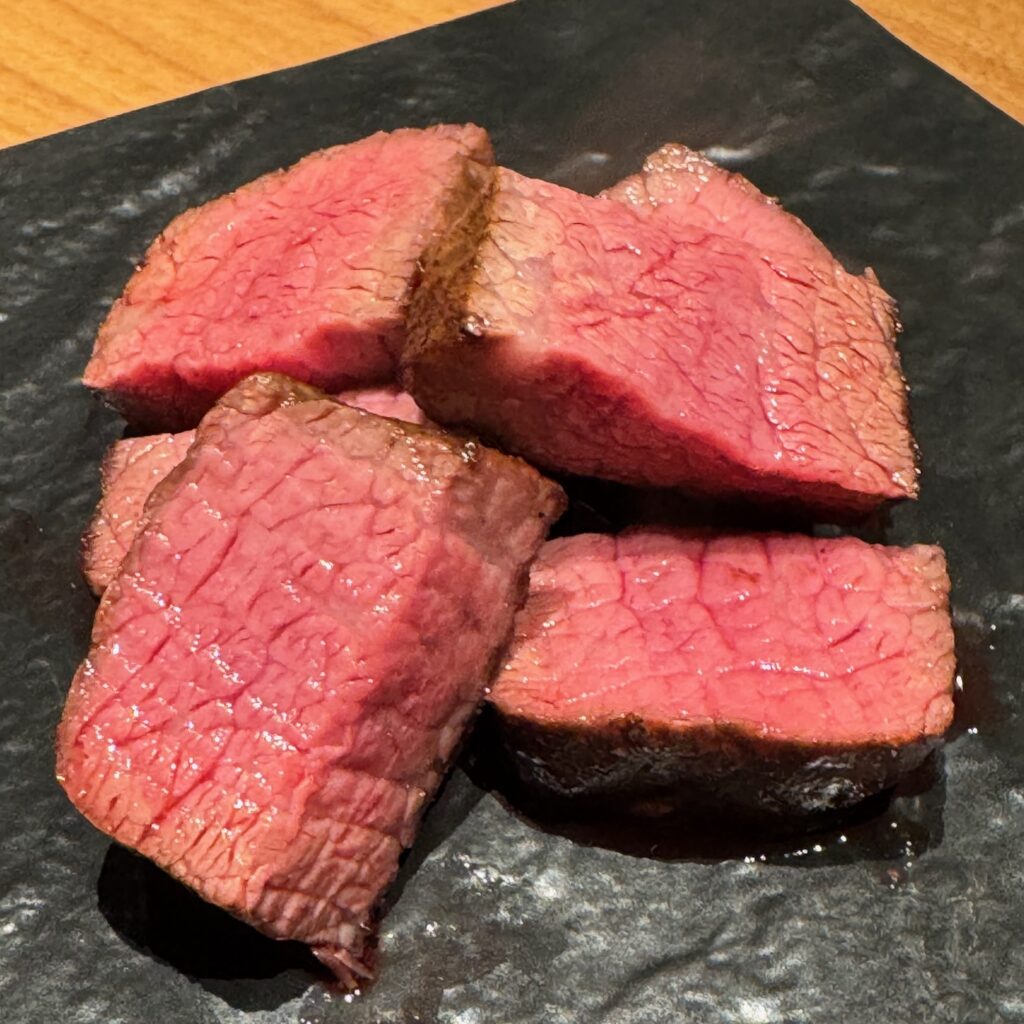
However, as marbled meat became the market standard, this lean-meat breed struggled to find favor and was once pushed to the brink of extinction, with only about 10 head remaining.
Even today, there are fewer than 100 purebreds in all of Japan, with an annual production of less than 20 animals. Its overwhelming rarity and historical value are what make it a true legend, far beyond a simple comparison to A5.
The Ultimate Answer: Ibusanagyu
What if you could experience the historic umami of the Tsuru Ushi and the desirable melt-in-your-mouth texture of modern Wagyu at the same time?
The ultimate answer is the Ibusanagyu.
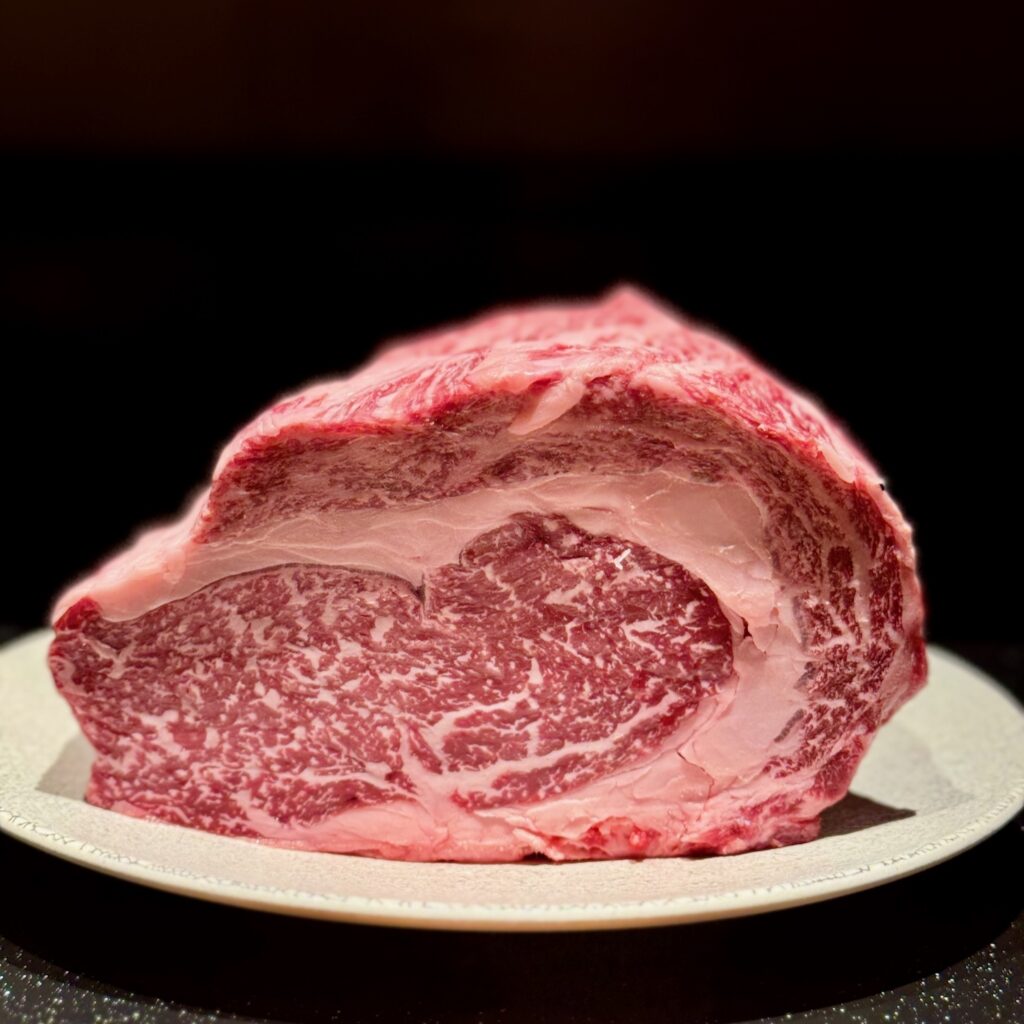
Sired by the legendary Takenotani Tsuru Ushi and born from a hand-picked, modern Kuroge Wagyu dam, this miraculous hybrid combines the deep umami and aroma of its heritage breed with the silky texture and sweet fat of its contemporary parent. With fine marbling perfectly balanced within the lean meat, it represents a “new value” in Wagyu that aims to create an experience of “surpassing A5.”
Finding the “Best Wagyu Restaurant” in Tokyo
Let us now arrive at the conclusion of this long story.
Where is the best Wagyu restaurant in Tokyo?
The answer lies in the one place where you can experience this unique legend.
From the massive Shinjuku Station, it is just two stops on the Odakyu Line to Sangubashi.
In this quiet and sophisticated town, adjacent to the forests of Meiji Jingu Shrine, you will find our restaurant, WAGYU YAKINIKU IBUSANA.
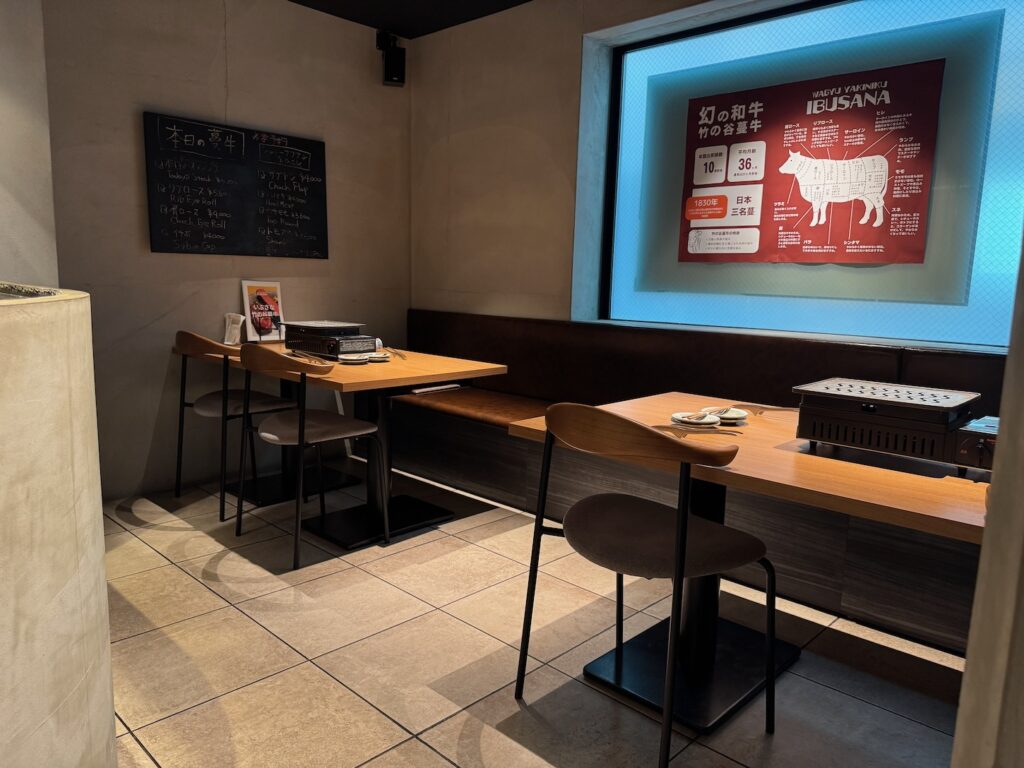
We are the only specialty yakiniku restaurant in Japan dedicated to serving both the Takenotani Tsuru Ushi and the Ibusanagyu.
Depending on the day’s availability, we offer the unique experience of comparing the powerful red meat of the “Takenotani Tsuru Ushi” with the balanced harmony of the “Ibusanagyu” at the same table.
This is a gastronomic journey through the past and future of Wagyu.
Our menu changes daily, reflecting the finest cuts available. Each dish on our blackboard represents an ichigo ichie a once-in-a-lifetime encounter.
If you are a traveler in Japan seeking not just a famous meal, but an authentic story and a truly unforgettable memory, we invite you to visit us.
We promise to be the final destination on your quest to find the “best Wagyu restaurant in Tokyo.”
Reservation & Information
For a special evening and an unforgettable meal, you can make a reservation through the link below.
Reserve Here: https://www.tablecheck.com/en/shops/ibusana/reserve
WAGYU YAKINIKU IBUSANA
Address: 4-10-7 Yoyogi, Shibuya-ku, Tokyo

Comment